
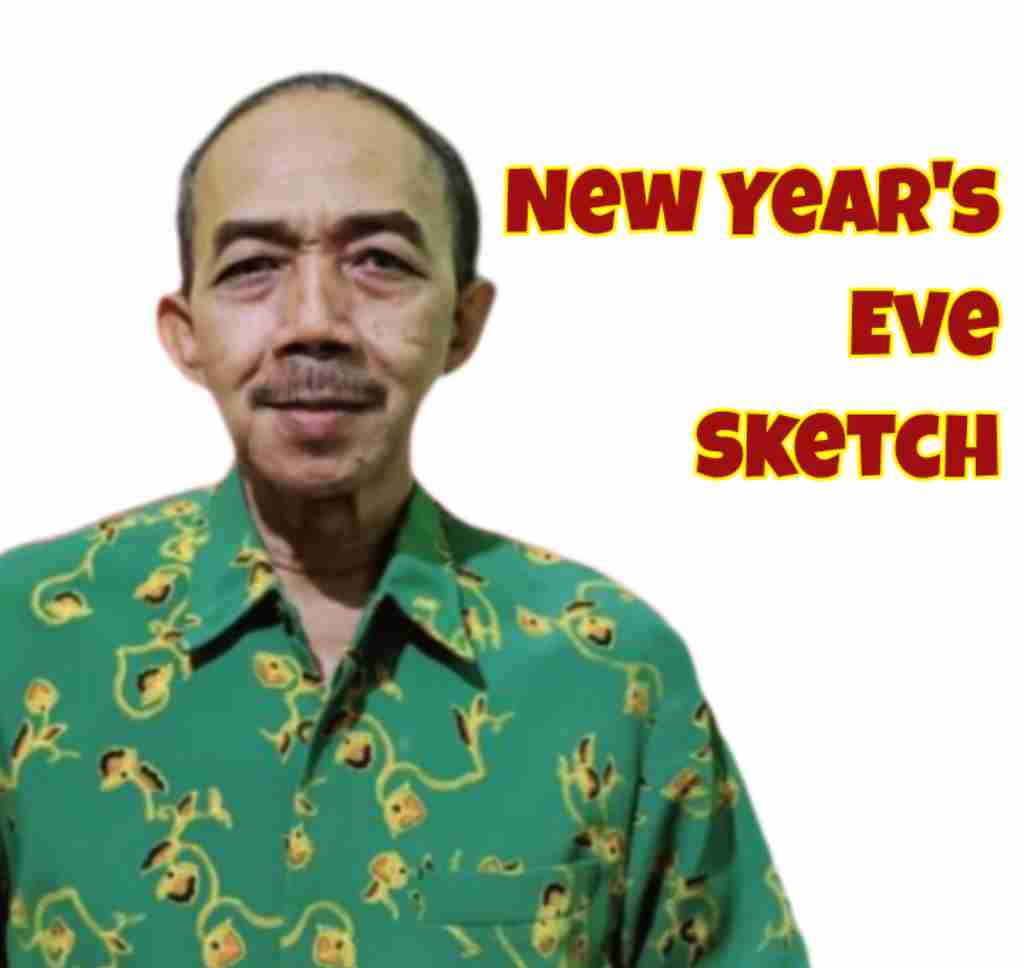
By: Aceng Syamsul Hadie (ASH)
The turn of the year is always greeted with euphoria. Fireworks, parties, and street crowds have become regular sights in various cities. But for Muslims, the question is not just what is celebrated, but how time is interpreted and held accountable.
In Islam, time is not an object of celebration, but a mandate. Every second life will be held accountable. Therefore, Muslim attitudes towards New Year’s Eve should be put into moral, ethical, and value of faith, not just social traditions that are followed without reflection.
A number of Islamic figures provide clear guidance. Habib Rizieq Syihab (HRS) consistently rejects New Year’s Eve celebrations that are identical to hurrah. This rejection stems from the fact that the celebration often leads to righteousness: drunkenness, promiscuity, waste, and loss of moral control. In this view, New Year’s Eve is not for celebration, but for muhasabah, repentance, and self-improvement.
A more communicative approach was presented by Ustadz Abdul Somad (UAS). He asserted that time was essentially neutral. What determines the value of good or bad is how humans fill it. If the New Year’s Eve is filled with righteousness, then it is clearly contrary to Sharia. However, if it is used for simple introspection, worship, or family togetherness, then there is no prohibition. The important message is firm: what’s wrong is not the turn of the year, but the human behavior.
Ustadz Bachtiar Nasir (UBN) emphasized the importance of self-introspection and returning to the way of goodness when facing New Year’s Eve. According to him, the new year should be used as a momentum to correct oneself, abandon things that Allah (property) prohibits, and increase the charity of devotion (piousness).
Meanwhile, Ustadz Adi Hidayat (UAH) reminded Muslims not to be trapped in rituals that have no basis. Islam has the Hijri calendar as a reference to worship and history. Therefore, New Year’s Eve does not need to be treated as a special celebration. However, it can still be interpreted as a moment of reflection and life planning, as long as it is not given a specific ritual status or religious symbol.
From these four views, the red thread is very clear: Islam is not hostile to time, but rejects evil and loses moral consciousness. The turn of the year should be a mirror of evaluation, not a euphoric event.
Ironically, in the midst of natural disasters, social crises, poverty, and inequality that are still wrapped around this nation, some communities are instead choosing to dissolve in a momentary feast of poor meaning. It’s as if changing calendar numbers can remove responsibility for what’s been and is happening.
New Year’s Eve is supposed to be a quiet space to ask yourself: what has been done for family, society, nation, and religion? Not just counting down the second of the turn of the year, but counting the extent to which life is lived with value and responsibility.
The nation is not lacking in entertainment and festivities. What we need is consciousness, moral maturity, and courage to change. And that change always begins with the way we define time—whether it’s spent on euphoria for a moment, or used as a foothold for a more meaningful life.[]
Author,
Aceng Syamsul Hadie, S.Sos., MM
Lecturer and Chairman of Daarurrahman Foundation Cigayam Majalengka (managing MAS, MTs, Madin and TPA)